Azores CAMões
Caving Analog Mission for Ocean, Earth, and Space exploration
After seven days in Gruta do Natal, the seven-member Crew Zero team emerged from their mission energized and fulfilled. Bringing this vision to life—advancing science and uncovering new possibilities—has exceeded all expectations. Important work lies ahead as we analyze our findings and begin sharing them through scientific publications, conferences, and upcoming events.
Our deepest gratitude goes to ‘Associação Os Montanheiros’ for their tireless dedication and support in ensuring our success. Every detail was thoughtfully addressed, even those beyond what we could anticipate.
To the Municipality of Angra do Heroísmo, thank you for the warm welcome and send-off. Your steadfast support accompanied us throughout this journey, and we are honored to contribute to the history of Terceira Island.
We also extend our sincere thanks to the Angra do Heroísmo Chamber of Commerce for their unwavering commitment to our mission.
Finally, to the Regional Government of the Azores, we are grateful for the trust you placed in us. We hold this remarkable environment in the highest respect and hope our work meaningfully contributes to the scientific legacy already established here.
The CAMões|Azores Research Mission was conceived from the technical-scientific vision of Dr. Rui Moura, Professor of Geophysics at the University of Aveiro, and Dr. Ana Pires, a researcher in Geotechnologies and Georesources at the Centre for Robotics and Autonomous Systems at INESC TEC, Porto. The initiative was later strengthened by the involvement of Dr. João Carlos Nunes, Professor of Volcanology and Geohazards at the University of the Azores, and Eng. Paulo Barcelos, President of the Speleological Association ‘Os Montanheiros’, based on Terceira Island. Together, they explored the feasibility of hosting this analog scientific mission in the Azores.
Over the past years, Dr. Pires and Prof. Moura have brought together a multidisciplinary team united by a shared commitment to protecting the oceans, preserving Earth’s natural systems, and exploring how space science can drive innovation across these domains.
The conceptual foundation of this vision was first outlined by Pires and Moura in their presentation “The Portuguese GeoTech-Vision for STEAM Outreach and Education: Space for All Nations” at the 50th International Conference on Environmental Systems, held in Lisbon in July 2021.
First announced at the GLEX Summit in June 2023 by João Carlos Nunes, the CAMões|Azores initiative represents a forward-looking commitment to international collaboration. + info: https://www.youtube.com/watch?v=YTcliblJwoc
The team will carry out its research analog at Natal Cave, on Terceira Island. This cave offers an exceptional and pristine environment for underground scientific activities. It was carefully selected for its distinctive geological characteristics, accessibility, structural stability, and the strong support of local organizations—making it an ideal setting for advancing this research initiative.
The selected team underwent an intensive, immersive programme designed to develop skills across multiple dimensions, including scientific, psychological, medical, safety, and logistical fields The trainees were guided by frameworks and recommendations established by NASA and the European Space Agency (ESA). In addition, several workshops were conducted with mission control and medical teams.
The Azores present unique scientific characteristics that make their lava tube systems highly valuable for planetary analog studies, particularly in supporting the planning and design of future lunar and Martian missions. These environments enable multidisciplinary research teams to investigate key challenges related to environmental conditions, engineering constraints, geochemistry, crew dynamics, and robotic operations within volcanic subsurface settings.


For decades, Azorean and Portugal-based scientists have studied these landscapes and underground structures, developing a deep understanding of the volcanic processes that shaped the islands and the formation of their lava tubes. This long-standing body of research provides a strong scientific foundation for ongoing and future investigations.
However, truly extreme environments are often difficult to access or require significant resources to ensure safe conditions for human exploration and testing. The challenge, therefore, lies in identifying sites that effectively balance accessibility, safety, and high scientific value across multiple technical domains.
In this context, Natal Cave, on Terceira Island, stands out as a compelling option. Its distinctive geological features, structural stability, and logistical accessibility make it an excellent natural laboratory for advancing analog research related to planetary exploration.
The goal of this first analog mission is really to prove the use of Azorean volcanic caves as a scientific and research space analog context for multisectoral and long-term investigations.
From 2028 onwards, this collective effort aims to establish a distinctive and replicable framework for effective international research collaboration, while simultaneously validating a well‑preserved analog mission site. The sustained and systematic use of Azorean cave systems will advance methodologies for space exploration and foster innovative approaches to the responsible stewardship of our home planet.
“Our intent is to firmly establish this underground lava tube site as a key location for future missions,” stated Dr. Rui Moura. Accordingly, it is envisioned that these Azorean caves will serve as a natural laboratory for space exploration, welcoming researchers from diverse nations and backgrounds.
“Ad astra per aspera” (through adversity to the stars) is the guiding motto of the CAMões|Azores mission.
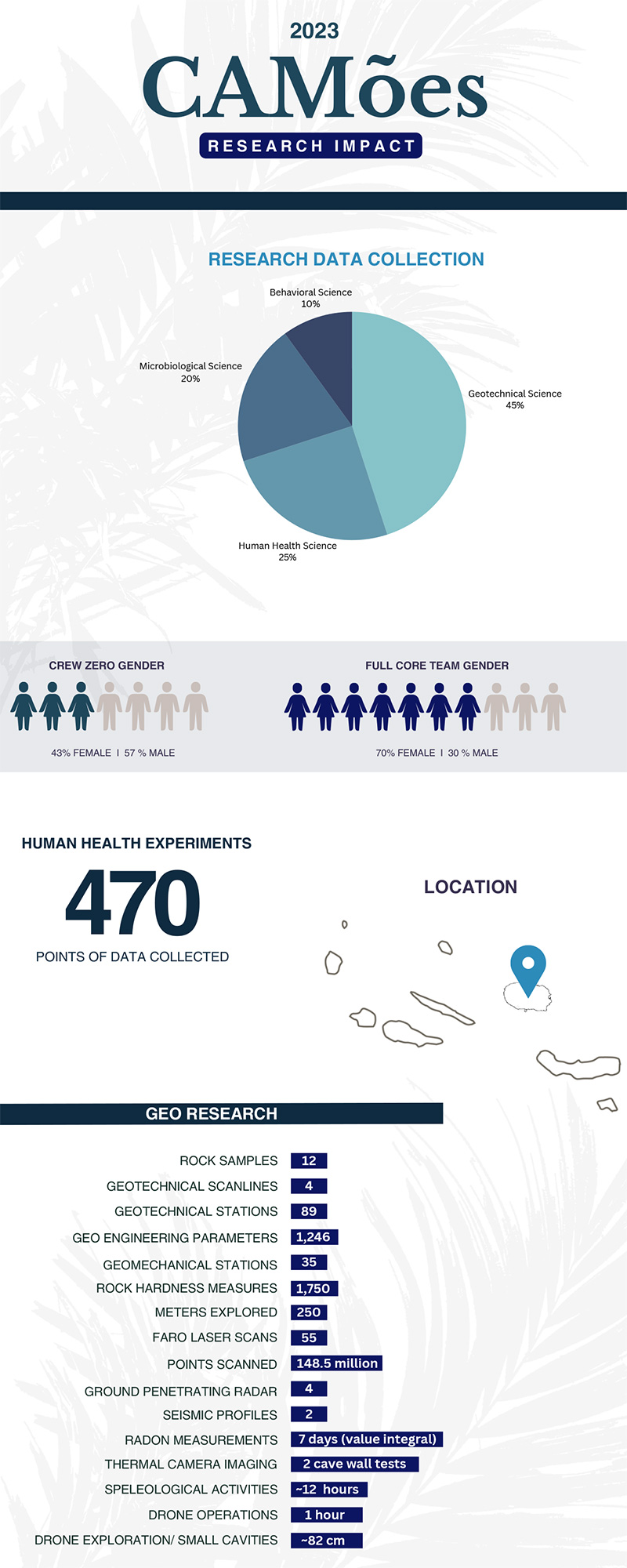
This seven-day space research analog took place in Gruta do Natal, on Terceira Island, in November 2023. A crew of seven spent six nights and seven days inside this lava tube cave, becoming the first individuals to remain overnight in such an environment. The team represented five countries, spoke eight languages, and brought together expertise from more than eleven scientific fields.
Supporting the mission, an international Mission Control team—comprising specialists in speleology, volcanology, microbiology, geochemistry, and space medicine—operated outside the cave.
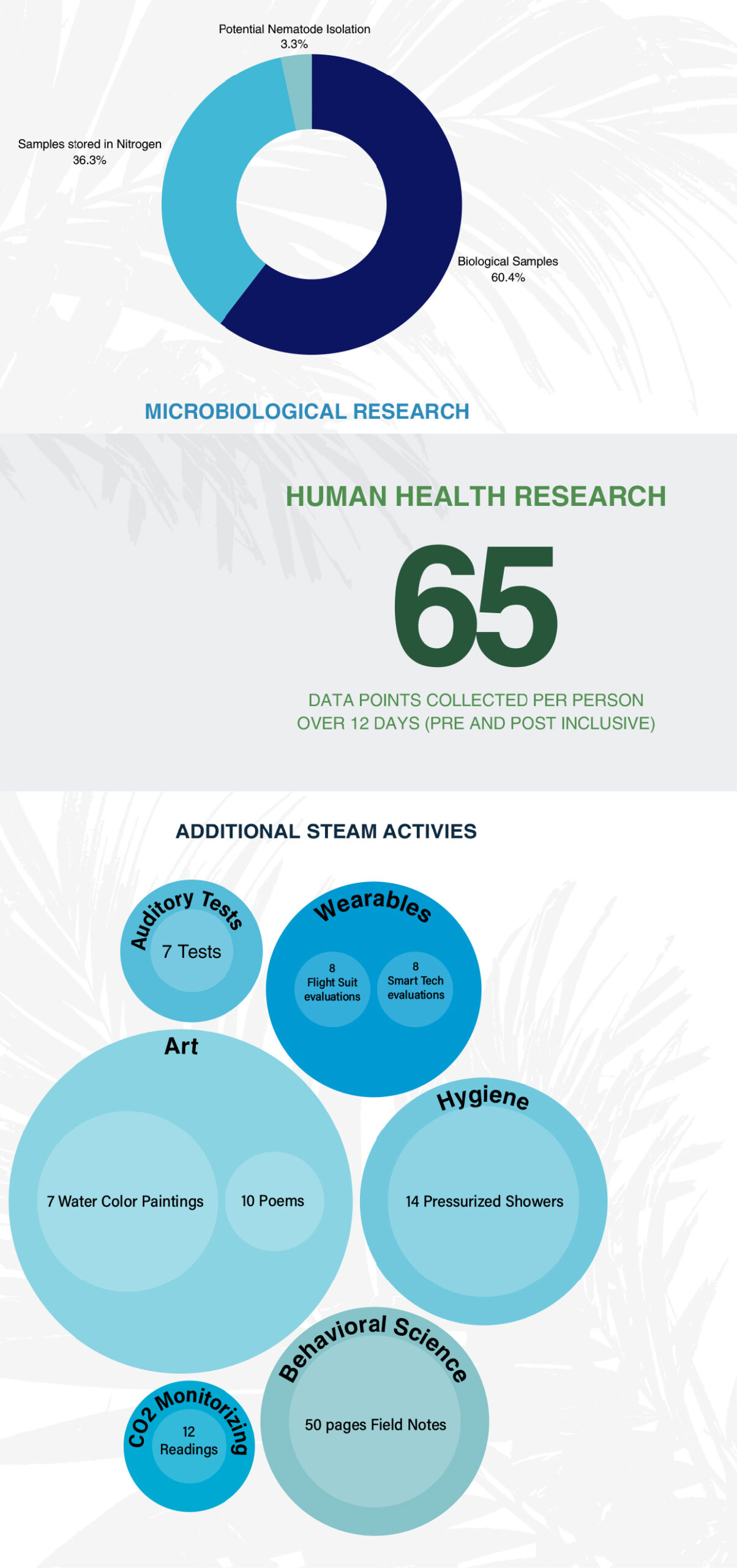
Leveraging the unique geological features and biodiversity of Natal Cave, the crew conducted approved, environmentally responsible, multidisciplinary longitudinal studies. These included investigations in geo-mapping, geophysics, geotechnics, microbiology, cave climate, and human performance, laying the groundwork for future analog missions.
Upon completion, the team emerged in time to celebrate the 60th anniversary of their host and partner, the Azores-based nonprofit speleological association ‘Os Montanheiros’.
+ info: Barcelos P, Pires A (2024) Projeto CAMões, a primeira missão espacial análoga em Portugal. Pingo de Lava, Boletim Informativo da Associação os Montanheiros, 46: 2-21.
There are so many ways you can get involved.
To volunteer, discuss Partnerships, or to become a sponsor, please email us at
camoes.analog@gmail.com
Visionary Sponsors
Bold Sponsors
Enabling Sponsors
Other Sponsor
Institutional Partners
Film Crew
Media Partner
Educational and Outreach Partners
Publishing Partnership
Outfitters
Gear and Materials partners
Science and Exploration Partners
Hospitality Partner
We’d love to hear from you. Send an email to:
camoes.analog@gmail.com
© photos from Marc Bluhm